
Disclosure: this page is published by TouchDrop, which offers a competing direct mail product. Competitor facts are checked against each vendor's own live pages.
Direct Mail for Abandoned Cart Recovery
Email and SMS own the first 24 hours of cart recovery, and they should: they are near-free and instant. A postcard is the second wave, for the carts they did not close. This page covers the economics, the sequencing, and the honest limits of mailing abandoned carts.
 Written by Hylke Reitsma, co-founder of TouchDrop
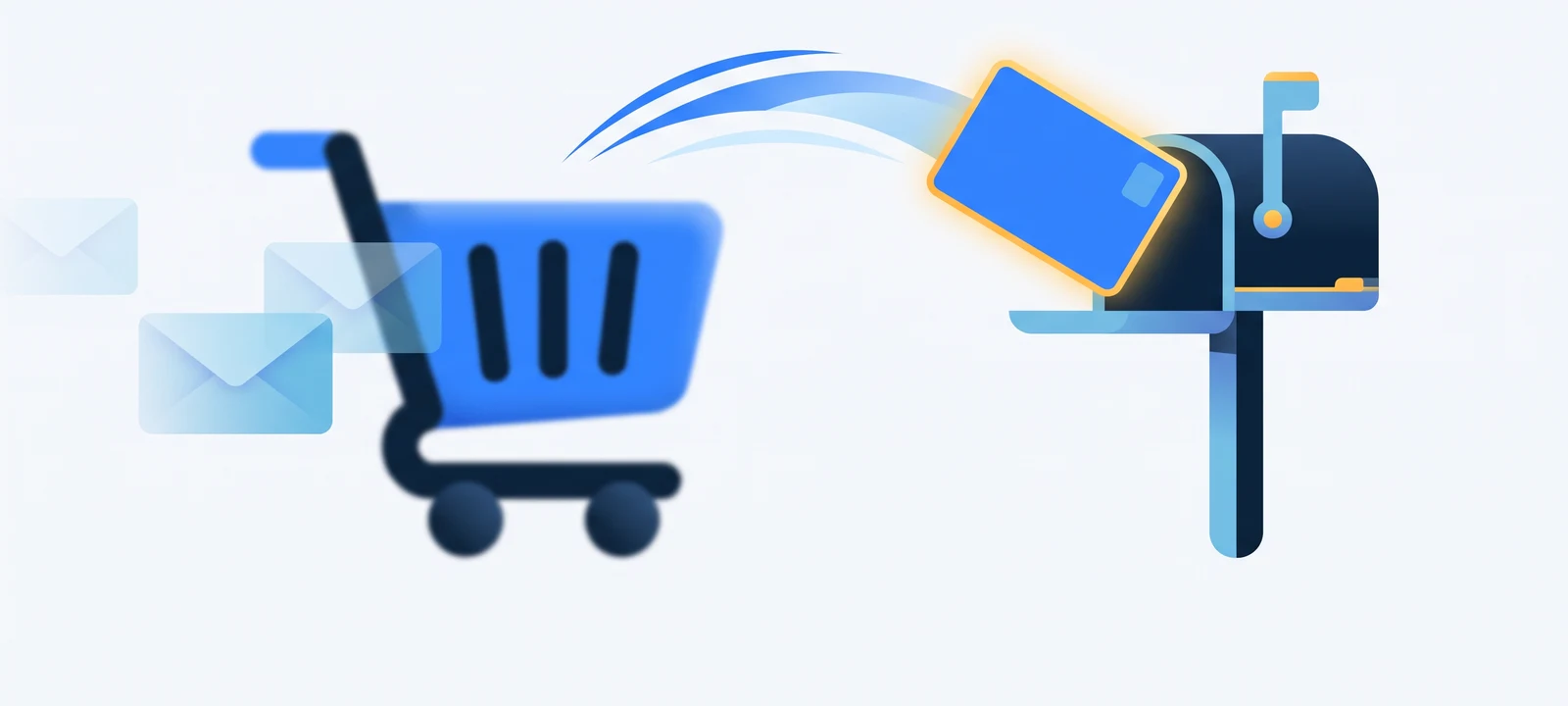
The sequencing: mail what email did not close
The abandoned-cart play most Shopify brands run is a three-step email sequence, sometimes with an SMS. It converts the easy wins in the first day. What remains after that sequence finishes is a list of people who showed buying intent and then went quiet in your digital channels. That remainder is the direct mail audience: the card enters a mailbox with no unsubscribe history, no spam folder, and no competition from forty other recovery emails.
Because the card triggers only after the digital sequence has had its window, and because anyone who purchases in the meantime is suppressed automatically, the two flows do not fight: mail spends its per-piece cost only on the carts email already failed to recover.
The economics: set a cart-value floor
Email can chase a small cart because sending costs nothing. A postcard cannot: print and postage are real money per piece, so recovery cards should chase carts whose margin covers the card several times over. In practice that means a cart-value floor, and a floor changes the maths of the whole flow: fewer cards, aimed at considered purchases, where a physical reminder arriving days later matches how people actually decide on bigger buys. TouchDrop pricing is on the pricing guide; sourced response and return benchmarks are in the benchmarks guide.
The honest limit: you can only mail an address
A large share of cart abandonment is anonymous: a visitor who never signed in and never reached the checkout has no shipping address, and no direct mail product can reach them. The mailable audience is returning customers, logged-in shoppers, and checkout-stage abandoners whose address is on file. That is a smaller list than your email flow sees, and it is also the higher-intent end of it: someone who typed a shipping address was close.
TouchDrop builds this audience from your connected Shopify store, applies your suppression rules, and excludes recent purchasers and prior recipients automatically. See suppression lists for what gets excluded and why.
Which platform fits
| PostPilot | PostGrid | TouchDrop (AU) | |
|---|---|---|---|
| Abandoned-cart flow | Pre-built flows, US-centred | None built in; you build the logic against the API | Pre-built cart and checkout abandonment triggers |
| Purchase suppression | Via its flow settings | Build your own | Automatic: purchasers, recent recipients and suppressed segments are excluded |
| Printing and lodgement | US print network | Multi-country via print partners | Printed and lodged inside Australia via Australia Post |
| Billing | USD | USD | AUD with GST |
| Attribution | Codes and matchback | Build your own | Unique code + QR per recipient, plus email and address matching |
Honestly: for a US brand mailing US customers, PostPilot is the natural pick. PostGrid suits a team with developers who want to assemble their own recovery logic. TouchDrop is the fit when your customers are Australian and you want the flow pre-built, printed and lodged locally.
Frequently asked questions
Can you mail every abandoned cart?
No, and any platform that says otherwise is overpromising. A postcard needs a shipping address, so direct mail reaches returning customers and checkout-stage abandoners whose address is on file. Anonymous browsers who never entered an address stay with your email and SMS flows.
Won't a card double up with my email flow?
Run it as the second wave. The card triggers on carts your email and SMS sequence did not close, and anyone who purchases in the meantime is suppressed automatically, so a converted customer never receives a recovery card.
Is direct mail worth it on a small cart?
Usually not. Because every card has a real print-and-postage cost, set a cart-value floor so recovery cards only chase carts where the margin covers the card several times over. High-consideration, higher-value carts are where the channel earns its keep.
How is a recovered sale attributed to the card?
Each card carries a unique discount code and QR code, and orders are also matched back by customer email and shipping address, so a customer who returns through a search or a bookmark is still counted against their card.
Related reading
Recover the carts email could not.
Checkout-stage targeting, automatic suppression, printed and lodged inside Australia.
Get started free